
Thrust Ball Bearings
A specific type of rotary bearing designed to handle axial loads—forces that push parallel to the shaft—while allowing rotation
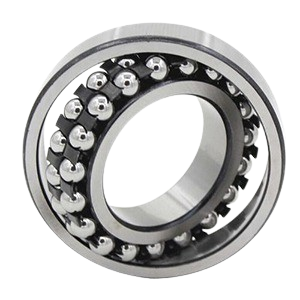
Understanding the Thrust Ball Bearings
Thrust Ball Bearings are rolling-element bearings designed with two rows of rollers. They feature a common sphered outer ring raceway and two inner ring raceways inclined at an angle to the bearing axis.
This construction allows the bearing to accommodate demanding mechanical conditions while maintaining controlled rolling movement.
BEARING CONSTRUCTION: a specific type of rotary bearing designed to handle axial loads—forces that push parallel to the shaft—while allowing rotation
APPLICATION AREAS
spanning automotive steering and transmissions, machine tool spindles, industrial pumps, and aerospace landing gear.
Machine tool spindles
Rotating machinery and industrial equipment.
Industrial pumps
Mechanical systems used in demanding environments.
Aerospace landing gear
Rotating equipment used within power systems.
Mechanical Drives
Drive systems requiring controlled rotation.
Thrust Ball Bearing Guide
Understand the essential information before selecting thrust ball bearings for your application.
Thrust Ball Bearing
Guide
Thrust ball bearings are rolling-element bearings designed primarily to support axial loads. They allow smooth rotational movement while controlling axial movement between mechanical components.
Thrust ball bearings are commonly used in industrial machinery, automotive systems, pumps, compressors, gearboxes and drive systems where axial load support and smooth rotation are required.
The bearing's rolling balls operate between specially designed raceways that carry loads primarily in the axial direction while allowing controlled rotational movement.
The main components generally include bearing washers, rolling balls and a cage or retainer. The exact construction can vary depending on the bearing design and application.
Bearing selection depends on factors such as axial load, rotational speed, shaft and housing dimensions, operating temperature, lubrication and the specific requirements of the application.
When requesting a thrust ball bearing, it is useful to provide the bearing part number or dimensions, required axial load, operating speed, application, operating conditions and any specific manufacturer or performance requirements.