
a2z.sanbrains-agency.in

PRECISION ENGINEERING

BALL BEARINGS

Precision rolling-element bearings engineered for smooth motion, controlled friction and dependable performance across demanding mechanical applications.
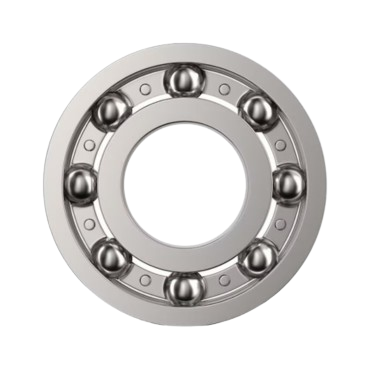
Ball Bearing
01 PRECISION COMPONENT
02 LOW FRICTION
Ball Bearing
ENGINEERED FOR ROTATIONAL PERFORMANCE
PRODUCT OVERVIEW

The Engineering
Behind Smooth Motion

A ball bearing is a rolling-element bearing designed to reduce friction between moving mechanical components.

A precision set of balls maintains separation between the inner and outer races while allowing controlled rotational movement. This construction supports smooth and efficient mechanical motion.

About

Ball Bearings

Every element works together to support controlled and efficient rotational movement.

IR

Inner Race

The inner ring interfaces with the rotating shaft and provides the internal raceway.

ROTATING COMPONENT
OR

Outer Race

The outer ring provides the external raceway and supports the rolling elements.

SUPPORT COMPONENT
RB

Rolling Balls

Precision rolling elements create rolling contact between the two bearing races.

ROLLING ELEMENT
C/R

Cage / Retainer

Maintains separation and positioning of the rolling elements during operation.

POSITIONING SYSTEM
BALL BEARING FAQ

Frequently Asked
Questions

Find answers to common questions about ball bearings, their construction, applications, selection and performance characteristics.

FAQ

Ball Bearing Guide

Understand the essential information before selecting a bearing for your application.
01 What is a ball bearing? +
A ball bearing is a rolling-element bearing that uses balls between inner and outer raceways to support rotating components and reduce friction during motion.
02 What are ball bearings commonly used for? +
Ball bearings are commonly used in electric motors, pumps, fans, gearboxes, automotive systems, CNC machinery and many other rotating mechanical applications.
03 How do ball bearings reduce friction? +
The rolling balls create rolling contact between the bearing races instead of direct sliding contact, which helps reduce resistance during rotation.
04 What are the main parts of a ball bearing? +
The main components are generally the inner race, outer race, rolling balls and cage or retainer. Some bearing designs may also include seals or shields.
05 How do I select the right ball bearing? +
Bearing selection typically depends on factors such as bearing size, load, speed, shaft and housing dimensions, operating environment, lubrication and the requirements of the specific machine.
06 What information should I provide when requesting a bearing? +
Providing the bearing number, dimensions, application, machine type, operating speed and load requirements can help identify a suitable bearing specification.